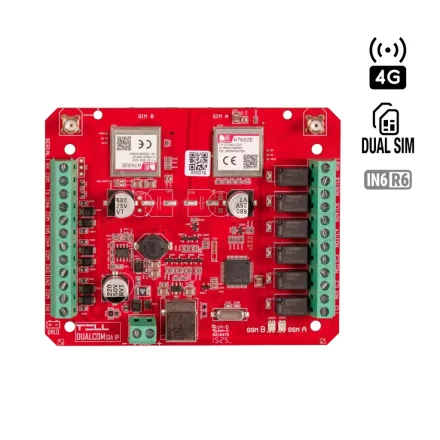



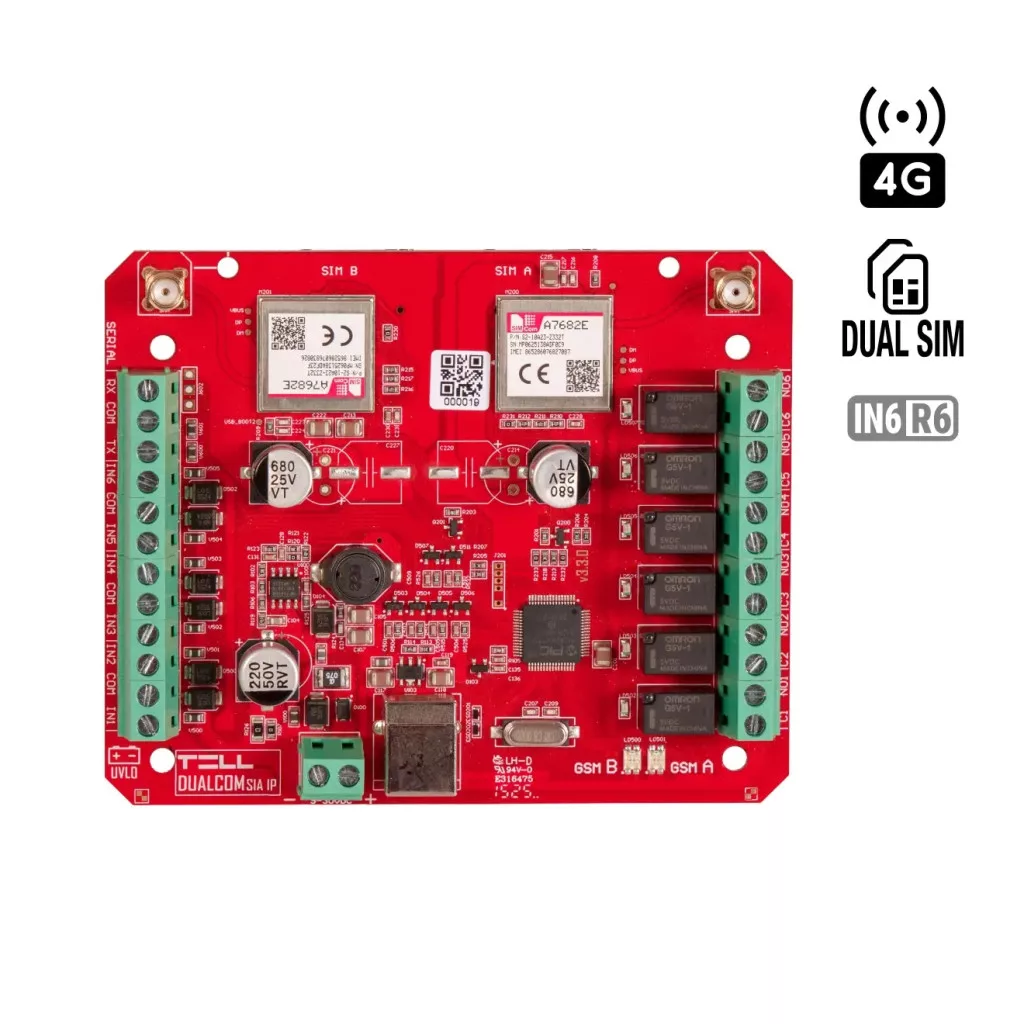
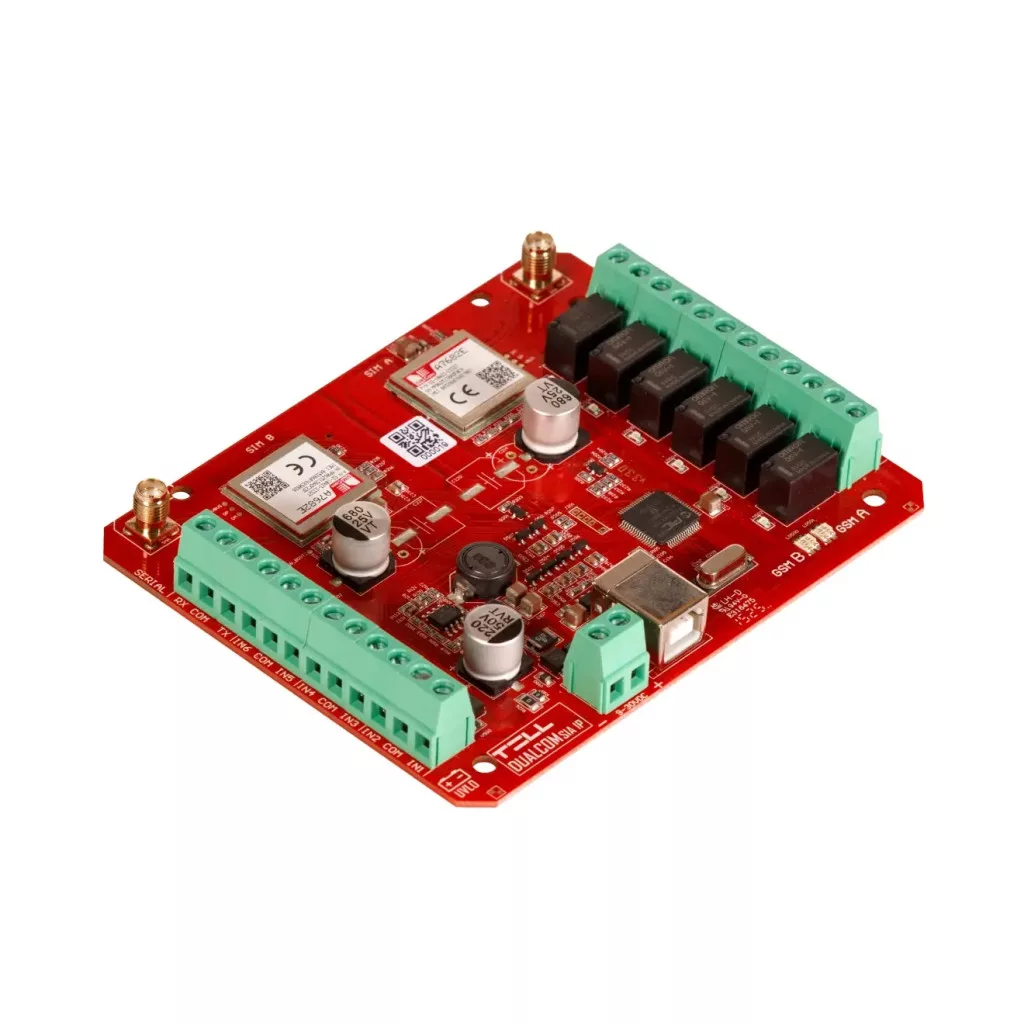
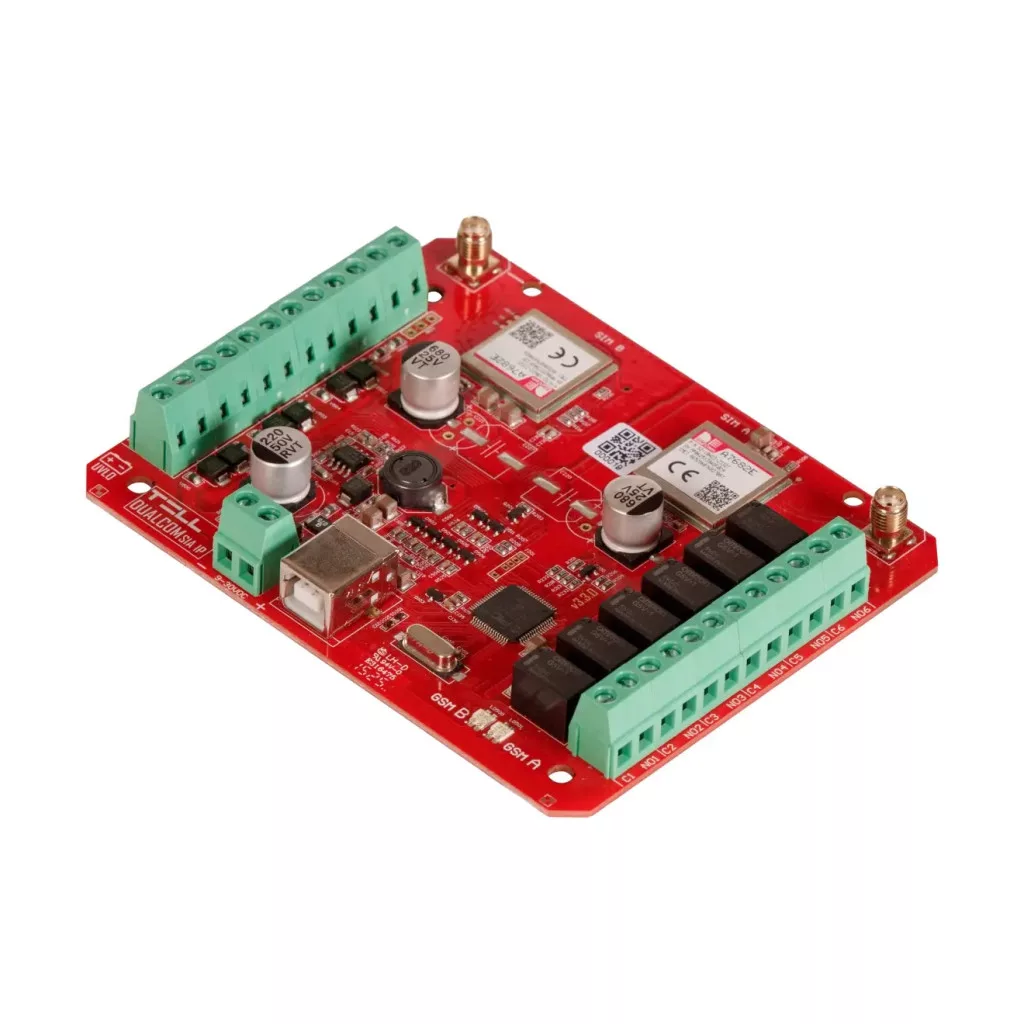
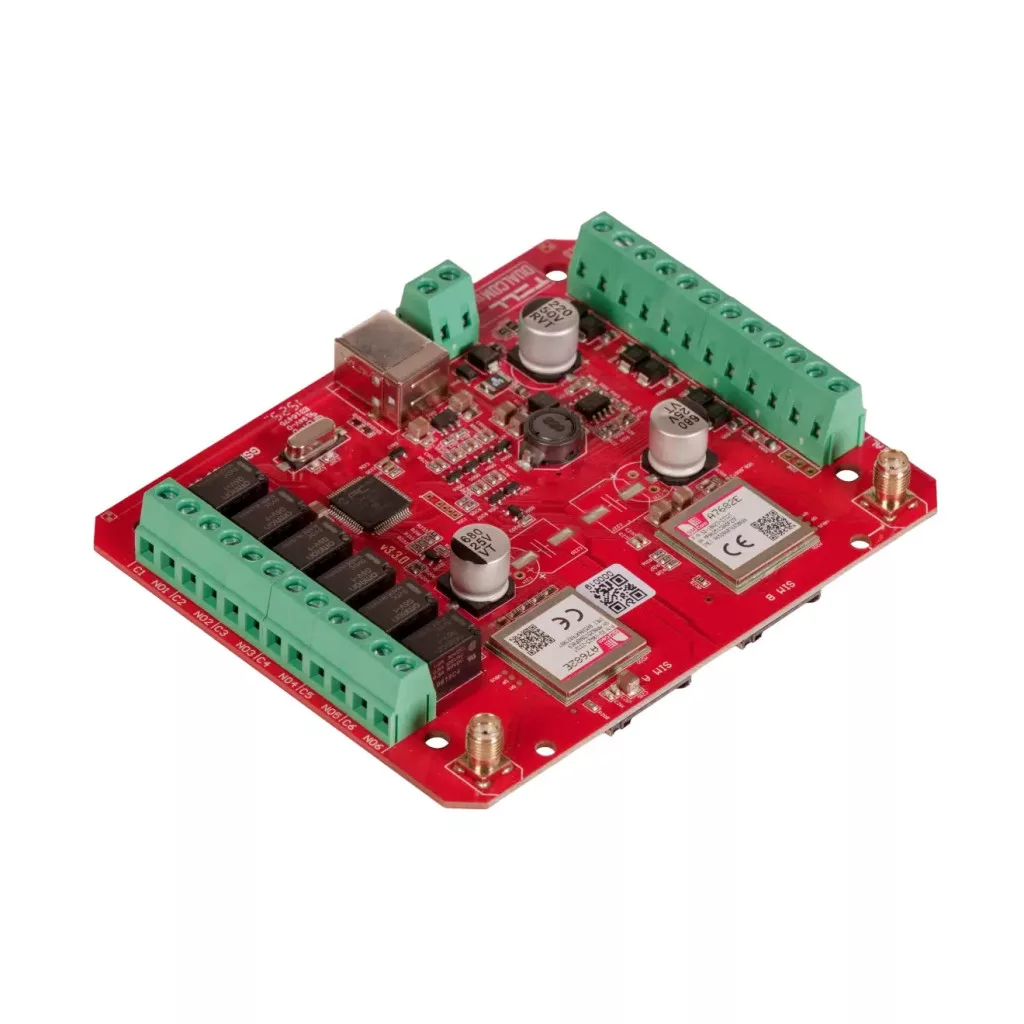
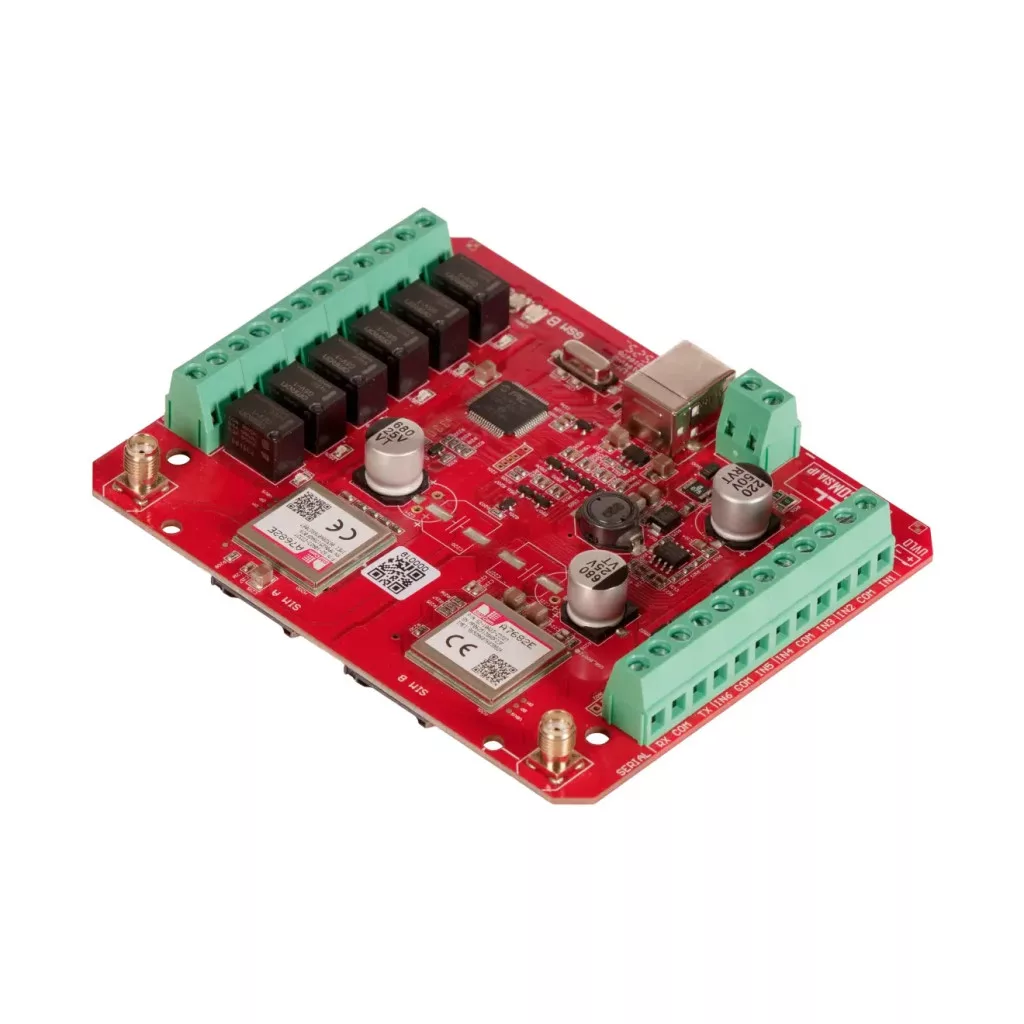
Communicator for fire alarm control panels that converts contact input events to SIA DC-09, TELLMon or TEX format and sends them to the alarm monitoring receiver through IP channel over the mobile network.
Supported communication protocols: SIA DC-09, TELLMon, TEX
Parallel usage of two independent modems
Communicates directly with the receiver
Reporting to up to 4 IP addresses (2 primary IP addresses per network)
6 NO/NC/EOL contact inputs
6 configurable relay outputs
Supervision message with configurable interval of sending for automatic supervision of transmission channels
Supported operating system: Windows 10
Characteristics:
It can be used with any control panel that has contact outputs or the contact outputs can be obtained via relays. Using this device, the input events are sent to the monitoring station’s IP receiver over the GPRS network, using SIA IP protocol based on ANSI/SIA DC-09-2007 standard, TELLMon or TEX protocol.
No need for a central server, only an end-point IP receiver with Internet connection is required. The device works with TELLMon, TEX-MVP, and receivers that support the SIA DC-09 protocol.
Possibility to separate alarm events and technical events (sending alarm events only to the alarm monitoring station, and technical events only to the technical monitoring station).
The use of duplicated modems ensures a high security level, making the device suitable for high-risk signal transmission applications (e.g. transmission of fire alarm events).
Our website uses cookies necessary for basic functionality. You can allow additional cookies for broader features (marketing, analytics, personalization). For more details, see our Privacy Policy in the Privacy Notice.
Essential cookies are critical for the website’s core functions, and the site will not work properly without them. These cookies do not store personally identifiable information.
We use marketing cookies to track visitors’ activity on the site. The goal is to show relevant ads to individual users (e.g., via Google Ads and Facebook Ads) and encourage engagement, making our website more valuable.
Statistical cookies help the website owner understand how visitors interact with the site by collecting and reporting data anonymously.
Personalization cookies let us remember information that changes how the website behaves or looks.